
CTA is a marketing term meaning “call to action”.
CTAs serve as navigational tools that guide users through the sales journey, ultimately leading to increased engagement and improved conversion rates. A well-crafted CTA can mean the difference between losing a potential opportunity and securing a valuable lead.
An effective call to action (CTA) is critical for motivating your audience to take specific steps, whether signing up for a newsletter or making a purchase. Strategically placing CTAs on website pages, within email campaigns, or across social media platforms can significantly enhance user engagement.
While many CTAs are presented as buttons for maximum visibility, they can also take the form of highlighted links (hyperlinks) or persuasive closing statements in blog posts. This allows marketers to weave CTAs seamlessly into diverse content, enriching the user experience while driving your desired action.
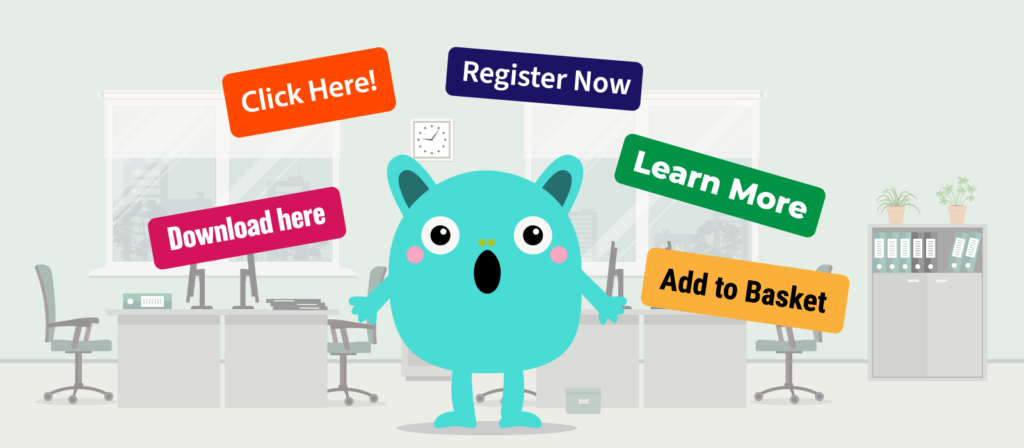
Given the multitude of CTAs vying for attention, how can you ensure yours stands out and effectively drives conversions?
Let us take a moment to review why CTAs are critical in B2B marketing. A CTA is a button or link that encourages your website visitors, to take a specific action. Whether it’s filling out a form, downloading a white paper, or scheduling a demo – CTAs are crucial because they help you convert website visitors into leads.
Let’s review some general best practices for creating compelling CTAs that not only capture interest but also convert leads into loyal customers
Your CTA should be clear and concise. Use straightforward, easy-to-understand language that clearly communicates the desired action. Avoid industry jargon to keep it accessible.
It needs to communicate exactly what visitors can expect when they click it. Use phrases like ‘Download our white paper,’ ‘Schedule a consultation,’ or ‘Request a demo’.
Your CTA should use action verbs encouraging visitors to act, such as ‘Buy now,’ ‘Download our guide,’ or ‘Subscribe to our newsletter.’
Your CTA should communicate what visitors will get when they click it. Use phrases like ‘Get instant access,’ ‘Join our community of XX subscribers,’ or ‘Start your free trial.’
Your CTA should stand out visually from the rest of your website. Use a contrasting colour or bold font to draw attention to its placement. It should be immediately noticeable and inviting to click.
Your CTA should highlight the benefits of engaging with your brand. Use phrases like ‘Learn how to increase your revenue,’ ‘Get expert advice on XX,’ or ‘Discover how we can help your business grow.’
Your CTA should create a sense of urgency that motivates visitors to act. Use phrases like ‘Limited time offer,’ ‘Act now to secure your spot,’ or ‘Don’t miss out on this opportunity.’
Your CTA should be placed where visitors are most likely to see it. Your CTA could be above the fold (part of a webpage that’s visible without scrolling), at the start and end of a blog post, or be ‘sticky’ (always visible regardless of scrolling) at the top or bottom of the screen.
If you are trying to focus on converting your website visitors into leads, don’t confuse the visitor by having multiple CTAs on one page. Use just a single CTA and repeat it on the page if necessary. That way you can accurately measure the success of your content; visitors will either convert or they won’t.
Some of the most effective landing pages remove all navigation, focusing the visitor’s attention solely on completing the form.
For more information on how many calls to action is too many, simply read the blog.
Here are some powerful B2B call to action phrase examples that can help you drive action, and conversions and boost your revenue:
This CTA is fantastic for B2B businesses that offer services or solutions that require a more personalised approach. By asking someone to calculate their ROI, you are encouraging them to consider the potential benefits and outcomes of investing in a product or service and to determine whether it is worth their time and money. This is a clear call to action that helps to drive conversions and encourage users to take action.
Offering a free guide or resource is a fantastic way to provide value to potential customers and encourage them to engage with your brand. Use a phrase such as ‘Download our ultimate guide to XX’ or ‘Get our free eBook on XX.’
If you offer a product or software solution, offering a free trial can be a powerful way to highlight its value and encourage visitors to make a purchase. ‘Try it for free’ can be a highly effective call to action because it aligns with the user’s search intent. When someone is searching for a product or service, they are typically in the research phase of the buying journey and are looking for information to help them make a decision. By offering a free trial, you are providing the user with exactly what they are looking for, which can help boost your search engine rankings and drive more traffic to your site.
Offering a discount is a great way to incentivise potential customers to make a purchase or sign up for your services. Use a phrase like ‘Get 20% off your first order’ or ‘Sign up now and receive XX% off your subscription.’
For more inspiration on creating effective B2B CTAs, check out our blog post on Call to Action Phrases That Cut Through
A/B Testing
A/B testing is a powerful method for optimising your CTAs by allowing you to experiment with different wording, designs, and placements to determine what resonates best with your audience. Regular testing is essential, as customer preferences can evolve, and what works today may not be as effective in the future.
Understanding where your audience is in their buying journey is crucial. A visitor who is just discovering your brand will respond differently to a CTA than someone ready to make a purchase. For example:
Different pages on your website and various marketing channels serve distinct purposes, so your CTAs should reflect that. For instance:
CTAs in email marketing and on social media platforms also need careful consideration:
To maximise the effectiveness of your CTA, conduct A/B tests that focus on these variations in audience progress and page types across different channels. Consider the following:
By tailoring your CTA to match audience progress, page types, and various marketing channels, you can create more relevant and compelling prompts that lead to higher conversion rates and improved lead generation.
Regularly reviewing and adjusting your strategies will help you stay aligned with your audience’s changing preferences.
Crafting an effective cta is essential for driving conversions in B2B marketing. By understanding your audience’s journey and the specific context of each page or marketing channel, you can create a CTA that resonates and motivates action.
Keep your CTA clear, direct, and benefit-driven. Regularly test and refine your approach to ensure your CTAs remain effective as customer preferences evolve.
By following this guidance, you’ll enhance the user experience and strengthen your lead generation efforts. Using the right words and phrases can encourage your target audience to take the desired action and engage with your business.
Remember to keep your CTAs clear, concise, and relevant to your content. Follow our golden rules of placement and avoid overuse to make your CTAs stand out and drive results.
These tips and tools can help increase your conversion rates and achieve your marketing goals. Don’t hesitate to utilize the valuable resources provided by our digital marketing team to create effective CTAs that resonate with your audience.
Still not generating high-quality leads through your website? If you answered yes, then let’s explore how we can help!